a faithful account
of a falling brain
of a falling brain
An Encyclopædia of Imaginary LivesVol. III · Carroll–Cheshire
first edition,
1865
1865
Carroll, Lewis
/ˈkærəl/ · pseudonym of Charles Lutwidge Dodgson, 1832–1898
❦
English author, mathematician and logician, chiefly remembered for the children's novel Alice's Adventures in Wonderland (1865).[1] The book is conventionally read as nonsense, its episodes valued for invention rather than accuracy.[2]
Down the Rabbit-Hole
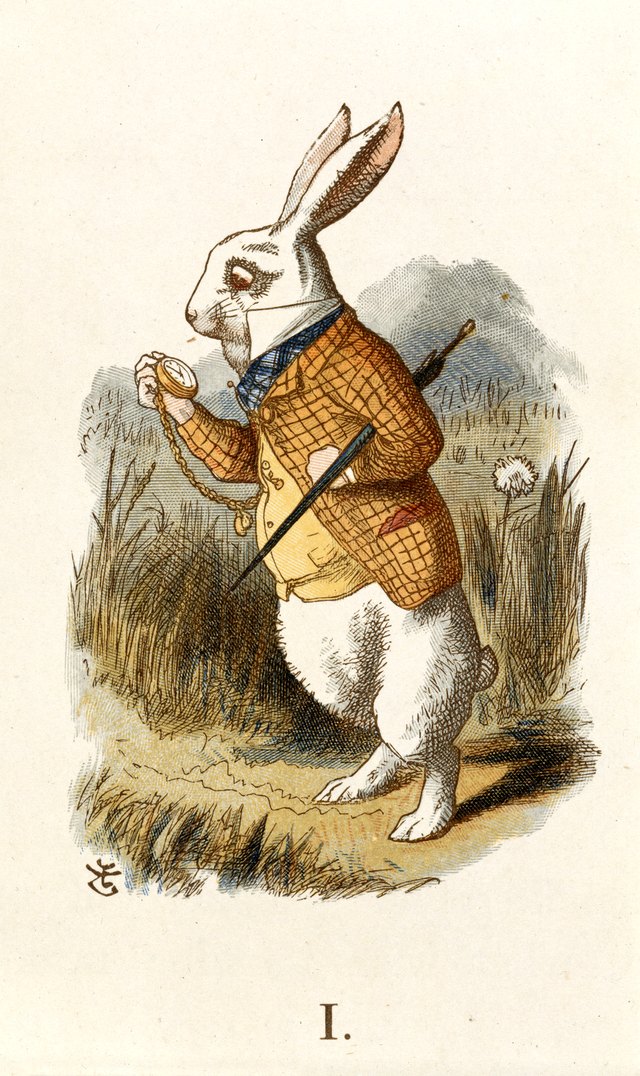
The narrative opens as the protagonist follows a waistcoated rabbit and descends a vertical shaft of indeterminate depth. The passage is notable for its handling of subjective duration: the falling child examines cupboards, shelves and an empty marmalade jar wholly at her leisure.[3]
For more than a century this was filed under whimsy. A later cross-reference would file it elsewhere.[4]
fetching plates…
scroll · sound on